The Transfer Flow Model Read Backwards
Where the model is experienced from the student's perspective as a forward-looking learning flow – from knowledge, to skills, to project work – it is read backwards in planning.
For the teacher, the Transferflow model is first and foremost a planning tool that ensures coherence, purpose and progression in teaching.
The planning is based on two basic principles:
- Purpose before activities – the teaching is designed based on what the students should be able to apply in practice.
- Backward planning – from project and practice back to skills and knowledge.
The model's three planning steps are described below.
1. From learning objectives to practice and project
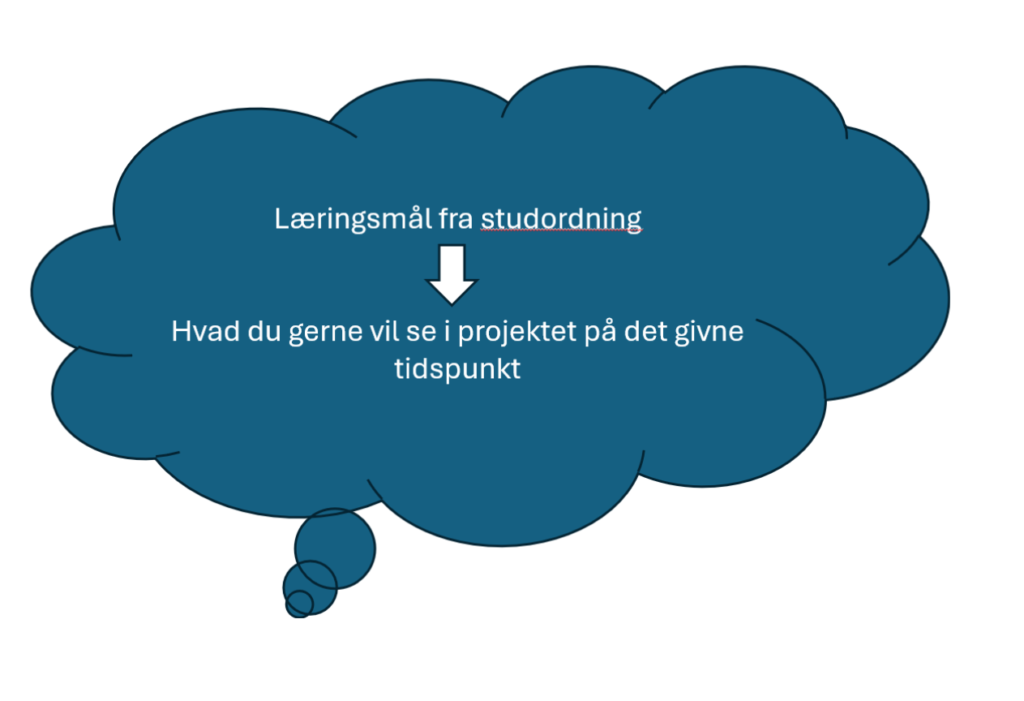
Planning starts in the curriculum.
Here the relevant learning objectives are identified, but instead of stopping at the formulations, they are translated into a more practical question:
What do these learning objectives specifically mean for the student to be able to do?
This interpretation forms the basis for deciding what you would like to see the student do in the project work at this point in the process.
The project functions here as a benchmark – not as a final test, but as a place where knowledge and skills are brought into play in a meaningful context.
The central focus of this step is therefore:
- What behavior, choices, or actions do I want to observe in the student?
- How does this reflect the academic goals in the curriculum?
2. Scaffolding through synchronous activities
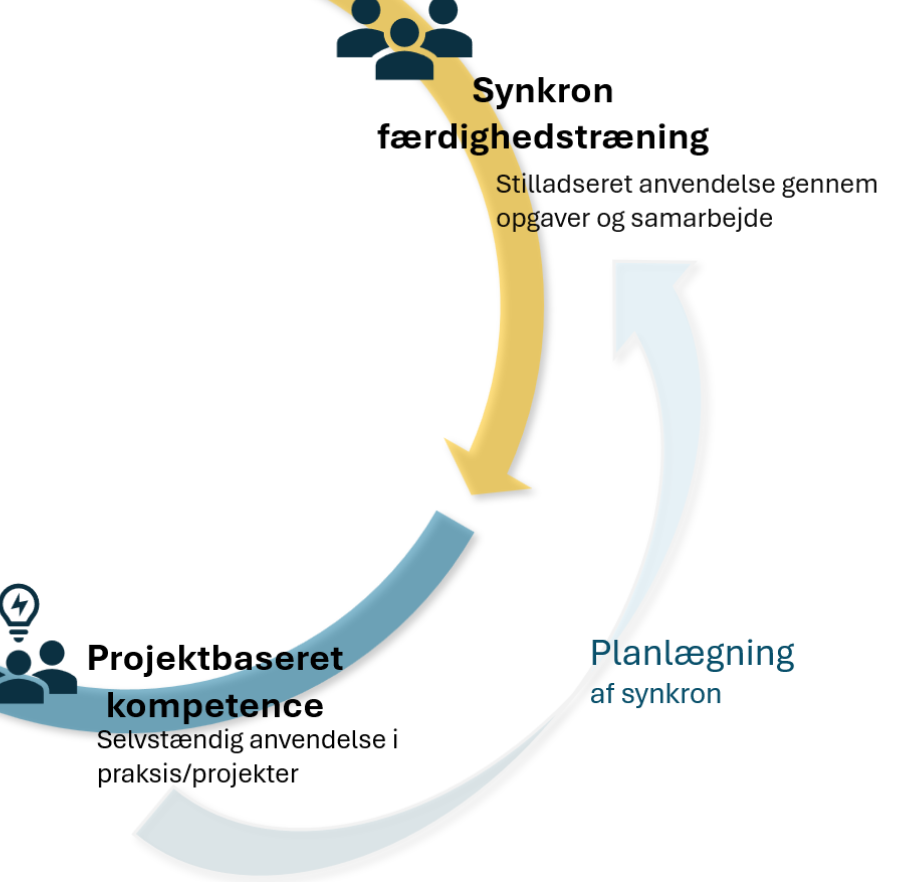
When the desired expression of the project is clear, the focus shifts to the synchronous part of the process.
Here, consideration is given to how, through scaffolded, collaborative tasks, students can be supported in gradually developing the skills necessary for the project work.
The synchronous activities are designed with the aim of:
- make complex professional practice manageable,
- create space for testing, dialogue and feedback,
- and give students the opportunity to practice in a controlled setting before working more independently.
Scaffolding is not an end in itself, but a means to bring students closer to the practice that they will later be able to master more independently.
3. The knowledge base: planning asynchronous learning objects
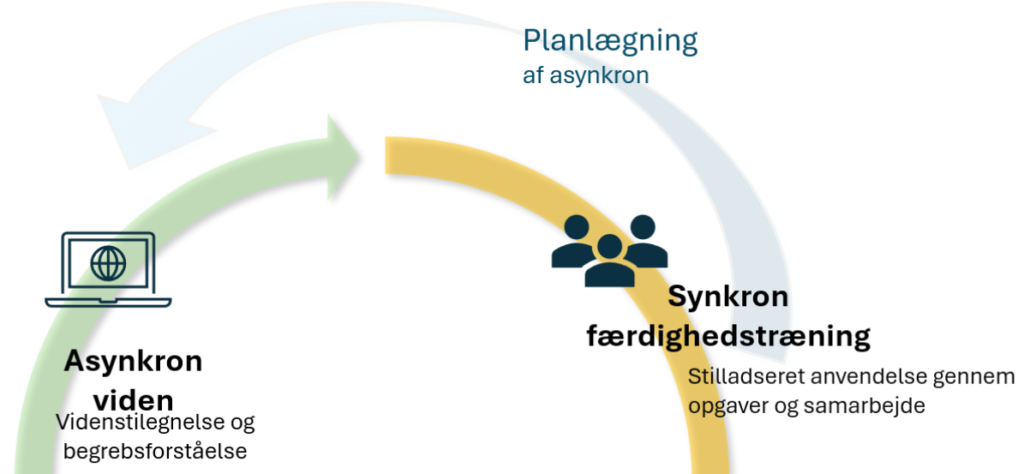
Only in this step does the focus turn to the asynchronous part of the process.
The starting point is not: what can we tell the students?
but rather:
What knowledge do students need to be able to solve the scaffolded tasks in the synchronous part?
The asynchronous learning objects – e.g. videos, texts, examples and explanations – are designed as a knowledge base that supports further work.
The focus here is on:
- conceptual understanding,
- professional contexts,
- and clear communication of what is central – and why.
The asynchronous part is thus not preparation in the traditional sense, but an integrated part of an overall didactic design.
About variation, learning styles and modalities
When teaching is planned in this way, it also becomes natural to consider variation in form, modality and task types.
Students acquire knowledge and skills in different ways, and a conscious choice of learning objects, activities and working methods can support this.
In the Toolbox, I have collected concrete ideas and examples of how to work with different learning styles and modalities in both asynchronous, synchronous and project-based courses.